

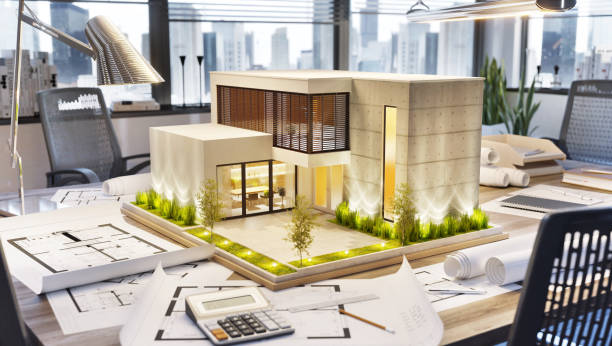
Industrial development begins long before machinery is installed or facilities are commissioned. It starts in planning rooms where ideas are translated into drawings, simulations, and feasibility studies. Yet, despite advances in digital tools, many industrial concepts remain difficult to fully understand until they are experienced in physical form. Scale, proportion, spatial logic, and component relationships often reveal their true impact only when designs are transformed into tangible models.
This is where the discipline of 3D model makers becomes essential within industrial environments. Their work bridges the gap between conceptual intent and physical understanding, enabling project teams to evaluate ideas with clarity and confidence. Industrial models are not artistic interpretations; they are structured representations built to support decision-making, coordination, and technical validation across complex projects.
The Strategic Role of Industrial Models in Project Planning
Industrial models serve as strategic tools during the early and mid stages of project planning. They allow stakeholders to visualize how individual elements interact within a larger system, whether it is a manufacturing facility, infrastructure network, or specialized industrial plant. This physical clarity supports more informed discussions and helps align expectations across multidisciplinary teams.
By presenting information in three dimensions, models reduce the reliance on technical interpretation. Decision-makers can assess spatial feasibility, access routes, and layout efficiency without navigating complex drawings. This accessibility improves communication, shortens review cycles, and reduces the likelihood of late-stage design changes that can disrupt timelines and budgets.
Translating Technical Concepts into Physical Accuracy
Transforming technical documentation into a precise physical model requires careful interpretation and disciplined execution. Every industrial model begins with a clear understanding of purpose, scale, and audience. These factors determine how much detail is required and which elements must be emphasized to support meaningful evaluation.
Accuracy is central to this translation process. Dimensions, alignments, and proportions are derived directly from approved drawings and digital data. When executed correctly, the model becomes a reliable extension of the design itself, capable of supporting layout verification, spatial analysis, and technical discussions without distortion.
Establishing Scale and Proportional Integrity
Selecting the correct scale ensures that the model communicates information effectively. Too small, and critical details are lost; too large, and the model becomes impractical. Proportional integrity allows viewers to understand relative sizes and distances accurately, supporting realistic evaluation.
Aligning Models with Engineering Data
Industrial models are built using verified engineering inputs rather than conceptual sketches alone. This alignment ensures consistency between physical representation and technical intent. It also allows engineers and planners to trust the model as a reference point during discussions.
Representing Functional Relationships
Beyond form, industrial models must explain how systems interact. This includes spatial flow, equipment sequencing, and operational zones. Clear functional representation transforms the model into a practical analytical tool rather than a static display.
Materials and Fabrication Techniques in Industrial Model Making
The quality of an industrial model is defined largely by its materials and fabrication methods. Materials are selected based on structural stability, finish quality, and suitability for precision work. Acrylics, metals, engineered plastics, and composite boards are commonly used to achieve clean detailing and long-term durability.
Fabrication combines advanced machinery with skilled manual processes. Digital tools provide accuracy and repeatability, while craftsmanship ensures precise assembly and refined finishing. This balance allows complex industrial designs to be represented faithfully in physical form.
Customization Based on Industrial Application
Industrial model making is inherently customized. Each sector presents unique requirements, from heavy manufacturing and logistics to energy and infrastructure. Models are adapted to highlight what matters most, whether that is process flow, spatial coordination, or system integration.
Customization also extends to modular construction. Some models are designed with removable sections or interchangeable components, allowing updates as designs evolve. This adaptability ensures that models remain relevant throughout multiple phases of a project lifecycle.
Models for Manufacturing and Production Facilities
Manufacturing models often focus on internal layouts, equipment positioning, and workflow efficiency. They help teams evaluate operational logic and identify potential bottlenecks before implementation. This foresight supports smoother commissioning and optimized production planning.
Models for Infrastructure and Urban Systems
Infrastructure models emphasize scale, connectivity, and environmental context. They help visualize how industrial developments integrate with surrounding systems. This broader perspective supports coordinated planning and regulatory review.
Models for Technical Demonstration and Review
Some industrial models are built specifically for technical review sessions. These prioritize accuracy and clarity over aesthetics, ensuring that engineers and specialists can assess feasibility and compliance effectively.
Quality Control and Precision Assurance
Consistency and reliability are achieved through structured quality control processes. Measurements are verified at multiple stages, and components are tested for fit before final assembly. This systematic approach minimizes errors and ensures dimensional accuracy.
Precision assurance also involves cross-checking physical models against digital files and approved drawings. Any discrepancies are corrected early, maintaining confidence in the model as a dependable reference. For industrial projects, this rigor is essential, as decisions based on the model can carry significant operational implications.
Enhancing Collaboration Through Physical Models
Physical models enhance collaboration by creating a shared visual language. Engineers, managers, investors, and non-technical stakeholders can engage with the same representation, reducing misunderstandings caused by technical jargon or abstract diagrams.
Models also encourage more interactive discussions. Stakeholders can point to specific areas, suggest alternatives, and explore scenarios in real time. This engagement leads to more productive feedback and faster consensus across teams.
Regional Context and Industry Standards
Understanding regional industrial practices is critical to accurate model making. Local standards, construction methods, and environmental considerations influence how industrial projects are designed and executed. Models that reflect these realities provide greater practical value.
In the context of industrial 3D models making in UAE, regional awareness becomes particularly important. Large-scale developments, specialized industrial zones, and compliance-driven planning require models that accurately reflect local conditions and operational expectations.
Final Note: The Enduring Value of Industrial Model Expertise
Despite advances in digital visualization, industrial models continue to hold enduring value. They offer a level of spatial clarity and physical presence that screens cannot replicate. When built with precision and purpose, they support better decisions, clearer communication, and more efficient project execution.
In summary, industrial model expertise lies in the ability to translate complex designs into accurate, functional representations that serve real-world needs. Art Heir Model Making applies this disciplined approach across industrial sectors, delivering structured physical models that support planning, validation, and collaboration while remaining aligned with evolving project requirements.