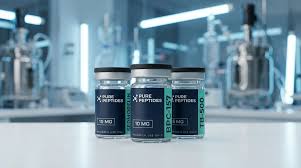
Premium NEP Scientific Compound with Exceptional Purity Standards
Modern scientific laboratories continue to advance through the use of high-quality compounds that ensure precision, consistency, and dependable analytical…

Modern scientific laboratories continue to advance through the use of high-quality compounds that ensure precision, consistency, and dependable analytical performance. In professional research environments, exceptional purity standards are essential for maintaining accurate results and structured experimental workflows. Researchers rely on materials that are manufactured under strict quality control systems and designed to meet the expectations of advanced scientific studies. Within this context, NEP (N-Ethylpentedrone) is recognized in laboratory discussions as a compound associated with controlled synthesis and suitability for analytical applications. Premium scientific compounds play a key role in ensuring reliable outcomes and supporting the overall integrity of laboratory research.
Why Are Exceptional Purity Standards Important in Scientific Compounds?
Exceptional purity standards are important because they ensure that laboratory compounds deliver accurate and consistent results during analysis. Scientific research depends on materials that are free from unnecessary impurities that could interfere with experimental outcomes.
When purity levels are high, researchers can observe chemical behavior more clearly and interpret results with greater confidence. This reduces uncertainty in laboratory findings and supports structured scientific evaluation. Exceptional purity also contributes to smoother workflows by minimizing variability during testing procedures.
How Do Premium Scientific Compounds Improve Laboratory Performance?
Premium scientific compounds improve laboratory performance by providing stable and reliable behavior in analytical environments. These materials are designed to maintain consistent composition across different batches, which is essential for repeatable results.
In laboratory settings, this consistency helps researchers conduct experiments with greater efficiency and accuracy. It also reduces the need for repeated testing caused by material inconsistencies. As a result, laboratories can maintain productivity while ensuring high-quality scientific output.
What Makes a Compound Suitable for Advanced Research Applications?
A compound is considered suitable for advanced research applications when it demonstrates high purity, stable composition, and controlled synthesis. These characteristics ensure that the material performs reliably under various laboratory conditions.
Suitability also depends on how well the compound integrates into scientific procedures. Research-grade materials are designed to support precise analytical methods and structured experimentation. This allows scientists to achieve accurate and reproducible results in complex research environments.
Why Is Consistency Essential in Scientific Research?
Consistency is essential in scientific research because it ensures that experimental results can be replicated and verified. When compounds maintain stable properties, researchers can confidently compare outcomes across multiple studies.
This repeatability is critical for building reliable scientific knowledge. Consistent materials also help reduce experimental errors and improve the efficiency of laboratory operations. In professional research environments, consistency is closely linked to accuracy and credibility.
How Does Purity Influence Analytical Accuracy?
Purity has a direct impact on analytical accuracy because it eliminates unwanted variables that may affect experimental results. High-purity compounds allow researchers to observe true chemical behavior under controlled conditions.
In laboratory analysis, purity ensures that data reflects actual reactions without interference from impurities. This leads to clearer, more precise results and supports better scientific interpretation. High-purity materials also improve efficiency by reducing inconsistencies during experimentation.
What Role Does Quality Control Play in Research Materials?
Quality control is a fundamental part of producing premium scientific compounds. It ensures that each batch meets defined standards for purity, stability, and performance before being used in laboratory environments.
Through systematic testing and evaluation, quality control helps confirm that compounds behave predictably during scientific analysis. This supports trust in laboratory results and reinforces professional research practices. Strong quality control systems are essential for maintaining high standards in scientific work.
Why Do Researchers Prefer Premium Scientific Compounds?
Researchers prefer premium scientific compounds because they offer reliable performance and consistent quality. These materials are developed under controlled conditions to meet the demands of advanced scientific studies.
Premium compounds help reduce uncertainty in experimental work and allow for more accurate data collection. Their dependable nature supports structured laboratory processes and enhances the overall efficiency of scientific research activities.
How Do High-Purity Compounds Support Scientific Advancement?
High-purity compounds support scientific advancement by enabling accurate experimentation and reliable data generation. When researchers work with stable and pure materials, they can produce findings that are consistent and reproducible.
This contributes to the growth of scientific knowledge by ensuring that research outcomes are trustworthy. High-purity compounds also allow laboratories to conduct more detailed and complex studies, improving innovation and expanding research capabilities.
Conclusion
Premium scientific compounds with exceptional purity standards are essential for modern laboratory research. From consistency and accuracy to quality control and stable performance, every aspect of professional compound production contributes to reliable scientific outcomes. Researchers depend on materials that provide predictable behavior and support structured analytical workflows. As scientific research continues to evolve, high-purity compounds remain vital for maintaining precision, improving efficiency, and advancing laboratory-based studies.