Medical Manikins vs Task Trainers: Understanding the Differences
Introduction
Hands-on practice is an essential part of health-care education. Nursing and medical students need opportunities to develop practical skills before performing procedures in real clinical environments. Two common tools used for this purpose are medical manikins and task trainers.
Although both support simulation-based learning, they serve different educational purposes. Understanding the differences can help nursing schools, health-care educators, and simulation labs select the right equipment for their training objectives.
What Are Medical Manikins?
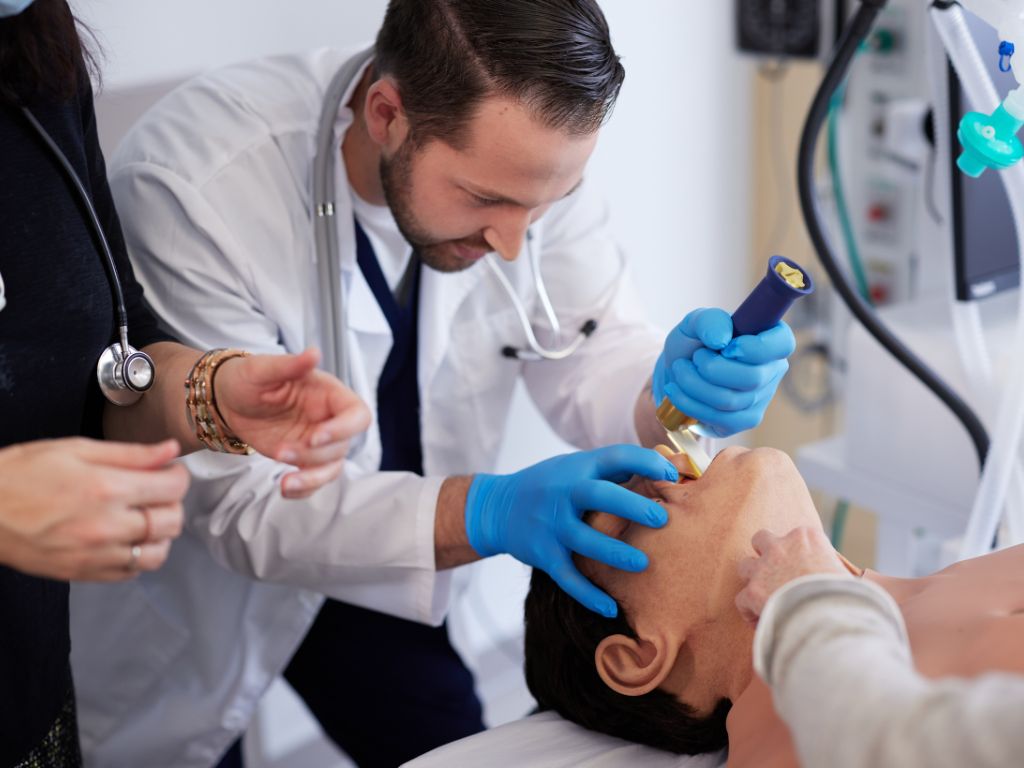
Medical manikins are simulated patients designed to replicate some aspects of the human body. They can range from basic full-body models to sophisticated systems capable of supporting complex clinical scenarios.
Depending on the model, medical manikins may be used for:
- Vital-sign assessment
- Physical examinations
- Patient positioning
- Basic nursing care
- Emergency response training
- Airway management
- Medication administration practice
- Communication and clinical decision-making exercises
Full-body manikins can help educators create realistic scenarios involving multiple skills at once. For example, students might assess a simulated patient, collect vital signs, communicate their findings, and respond to a developing scenario.
What Are Task Trainers?
Task trainers are specialized simulation tools designed to teach or practise specific clinical procedures. Instead of representing an entire patient, a task trainer usually focuses on one anatomical area or particular skill. Examples can include models designed for IV insertion, injections, catheterisation, wound care, or other procedures.
Task trainers allow students to repeat a particular technique multiple time. This makes them particularly useful when learners need focused practice before progressing to more comprehensive scenarios.
Key Difference: Breadth vs Specific Skills
The biggest difference between medical manikins and task trainers is the scope of training they provide.
Medical manikins are generally broader and can support multiple clinical activities. They are useful when educators want students to practise several skills within a realistic patient scenario.
Task trainers are more specialized. They allow students to focus on mastering one procedure or a specific group of related techniques.
For example, a full-body manikin might be used for a complete patient assessment, while a specialized arm trainer could allow students to focus specifically on IV insertion techniques.
Comparing Their Educational Benefits
Both types of equipment offer valuable benefits, but their strengths differ.
1. Medical Manikins
Medical manikins can help students:
- Develop broader clinical skills
- Practise patient communication
- Connect multiple procedures within one scenario
- Improve clinical decision-making
- Experience realistic patient-care situations
They can be particularly useful for advanced simulation exercises.
2. Task Trainers
Task trainers can help students:
- Focus on individual procedures
- Repeat techniques frequently
- Build muscle memory
- Receive targeted instructor feedback
- Practise specific skills before working with a complete simulated patient
They can be especially valuable during introductory skills training.
Conclusion
Rather than choosing one exclusively, nursing schools and health-care training programmes can benefit from incorporating both into their simulation strategy. Task trainers can help students master individual techniques, while medical manikins allow them to apply those skills in realistic clinical scenarios.
Together, they can create a structured learning pathway that supports practical skill development, confidence and preparation for real-world health-care environments.